By Tony Hufford, Global Market Intelligence Manager, Weiler Abrasives
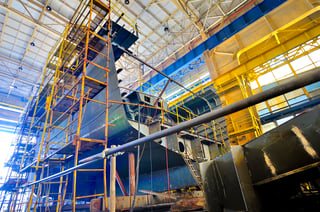
Whether it involves fabricating the massive external structure of a ship or installing important components inside, there are many critical welds in shipbuilding applications. Proper weld preparation, cleaning and post-weld finishing play key roles in creating high-quality results. This is important to meet the stringent weld standards and tight timelines of shipbuilding.
Knowing how to select the right abrasive product for cutting, grinding, weld prep and surface cleaning — and following common best practices — can help produce optimal results.
Cutting, Grinding and Weld Prep Challenges in Shipbuilding
There are many handheld tool and product options for shipbuilding applications. However, it’s important to determine the best solution for the job to improve productivity, extend product life and increase cost savings. Pneumatic, cordless and electric right-angle grinders and die grinders are common choices for weld preparation, cleaning and finishing.
Cutting and grinding work is frequently completed in confined and hard-to-reach spaces inside the ship, since this is where final assembly of many components and parts takes place. As a result, proper product selection is especially crucial — it helps operators best reach the work, optimize efficiency and avoid wasting time.
Think about a few key factors — from any space limitations where the work is being done to how far the operator must carry tools and equipment to the point of work. This will help your product selection.
How to Choose the Right Abrasive for Shipbuilding Applications
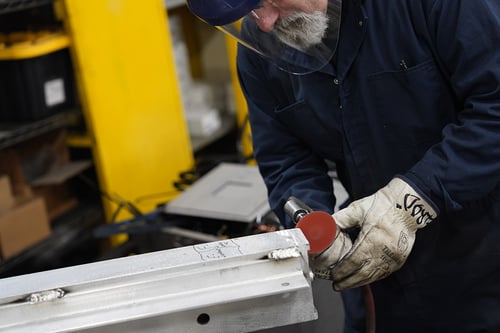 First, it’s important to consider the base material type when choosing cutting and grinding products. When working with aluminum, for example, be sure to choose products specifically designed for that material. Using products designed for carbon steel can result in cross-contamination and loading. Abrasive products specifically designed for aluminum or stainless steel should not be used again if they have inadvertently been used on carbon steel.
The conditions and work environment are also important factors in choosing the right product. If it’s time-consuming for the operator to get to the point of work — and if a confined space limits how many tools and abrasives they can carry — consider an alternative. A long-lasting product like a ceramic disc is a good option since it requires less frequent changeover. This helps save time and improve efficiency. In situations where the operator is trying to prolong battery life on cordless tools, a very thin cutting or grinding product is a good option. Consider a 1-millimeter-thick wheel to reduce strain on the tool.
Another factor to consider is the finish requirements of the part being fabricated. For example, parts for a commercial fishing vessel will have much different final requirements and specifications than parts for a military ship. Different abrasive products will result in different finishes and final look of the base material, so it’s important to understand these requirements.
Common Abrasive Products Used in Shipbuilding
There are many abrasive product options for the weld preparation, cleaning, grinding and finishing jobs required in shipbuilding. Selecting the right product for each step can help improve productivity, reduce changeovers and support high-quality welds. Here are some of the most common types of products and the jobs they are best suited for.
Coated Abrasives
Bonded Abrasives
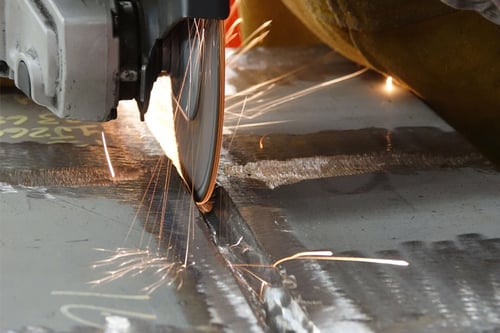 Cutting wheels, grinding wheels, combination wheels and mill scale wheels fall into this category. Cutting wheels are used for cutting through metal, such as plate, pipe and structural components. For normal grinding applications in shipbuilding, standard 1/4-inch grinding wheels are a good choice for weld blending, weld removal, edge beveling and torch-cut softening. When heavy mill scale must be removed before welding or coating, a dedicated mill scale grinding wheel can help operators remove tough scale efficiently while reducing the risk of gouging the base material. For back gouging applications, 1/8-inch combination wheels are a good option for preparing the weld joint. A shipbuilding back gouging case study shows how the right wheel selection can help improve productivity in this demanding application.
Non-woven Abrasives
Power Wire Brushes
Tips to Improve Abrasive Performance and Productivity
Choosing the right abrasive product for the job is the first step toward optimized results. It’s also important to follow some common best practices for safe and effective use of those products. Here are three tips for getting the most from abrasive products in shipbuilding applications.
1. Stay focused on safety
No matter how challenging the environment or demanding the timeline, safety should never be an afterthought in cutting, grinding and finishing. Always use the tool guard and wear proper safety gear. Never run any consumable over the maximum rated rpm, and follow other recommended techniques for safe product usage. Knowing the proper angle, speed and pressure for safe and effective use of each type of abrasive reduces hazards to the operator. It also can help prolong product life and save time.
2. Match the product to the work
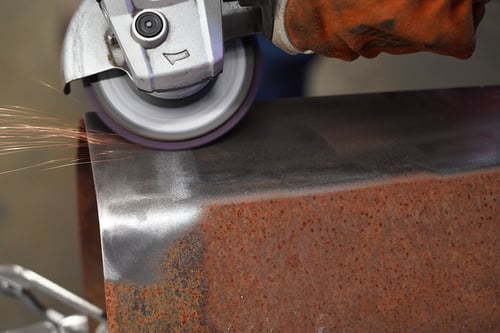 Abrasive products are not one size fits all, so the same accessory should not be used for every job. It may seem like a pain to carry in more than one abrasive product — especially when the work is far from the power source or in a hard-to-reach space. But making sure each task has the best abrasive for that job can help ensure success and improve efficiency and operator safety. or example, a 1/4-inch grinding wheel may be the right choice for weld removal or beveling, a strip disc may be better suited for cleaning a rusty surface before welding, and a 1/8-inch combination wheel may be the better fit for back gouging.
3. Understand tool limitations
When using pneumatic tools for the job, be aware that the farther an operator stretches an airline from the compressor, the more the pressure will drop. This drop can result in pressure being too low to efficiently run the tool or abrasive. To avoid this issue, try not to use extremely long air hoses or power cables for handheld electric or pneumatic tools. If this situation cannot be avoided, use a grinding or cutting wheel with a softer bond. These abrasives help optimize performance when a tool is underpowered. Be aware of the available pounds per square inch (psi) where the work will be performed in order to choose the right tools and abrasive products.
Get Better Results in Shipbuilding Cutting, Grinding and Finishing
Metal preparation, cutting, grinding and finishing are critical steps in creating high-quality welds in shipbuilding applications. The shipbuilding environment is often challenging and the timelines demanding. Choosing the right abrasive product for the work lays the necessary foundation for optimizing performance and results. Careful consideration of product selection and key best practices can also help save money, improve efficiency and reduce safety risks to operators.