By Dennis Brown, Technical Sales Manager - Weiler Abrasives
Gears are essential components that transmit power and motion between rotating shafts in many machines and devices, such as cars, airplanes, robots and wind turbines. To perform properly in these applications, gears must be durable, efficient and quiet.
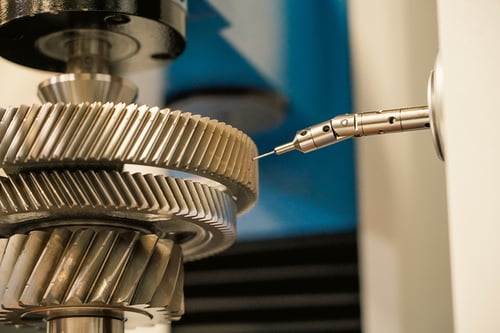 After case hardening, gears often require a hard-finishing process to correct dimensional changes, improve surface finish and help achieve the required geometry. Continuous generating gear grinding is one process that can deliver numerous benefits and help ensure gear quality. But getting the most out of the gear-grinding process requires attention to several factors, including grinding wheel selection, incoming part quality, and machine fixturing and setup.
The full article was originally published by Gear Solutions, a publication focused on the gear industry, and features insights from Weiler gear expert Dennis Brown. Brown discusses the factors that influence throughput and the importance of quality in the continuous generating gear grinding process.
Key factors that impact CGG grinding throughput
Continuous generating gear grinding throughput can often be improved by selecting the right grinding wheel specification, training operators on the correct machine parameters, controlling incoming part quality, maintaining proper fixturing and coolant delivery, safely mounting and inspecting the wheel, and documenting process variables such as wheel speed, feed rate, dressing frequency, coolant flow and cycle time.
Article takeaways
- Wheel specification should match gear material, quality requirements, MRR goals and dressing strategy.
- Operator training is critical when changing wheel technology or machine parameters.
- Incoming part quality can directly impact cycle time.
- Fixturing, coolant and mounting practices affect safety, consistency and uptime.
- Process documentation helps identify bottlenecks and quantify improvements.
Expert Recap
 What is continuous generating gear grinding?
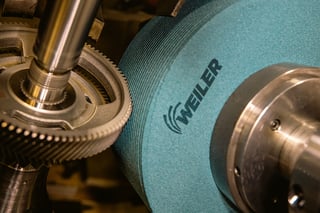
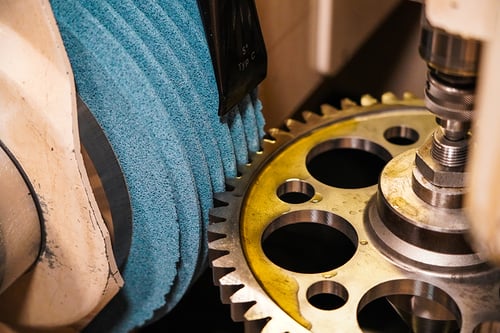
Continuous generating gear grinding, sometimes referred to as CGG grinding, is one of several types of gear grinding, and it is commonly used in high-production applications. It is a threaded-wheel process that uses a large-diameter grinding wheel with a thread pre-formed on the outside diameter, similar to a hobbing tool. This threaded wheel is dressed, allowing the side of the thread tooth to have the same pressure angle as the workpiece, and the workpiece and wheel rotate in a fixed ratio. The workpiece is fed axially past the wheel while the generating motion occurs.
Why is it important to grind gears?
The grinding portion of the process finishes the profile of the gear flanks for optimized performance. High-production applications that must produce a lot of gears quickly can gain many benefits from this type of gear grinding because it helps operations meet tight tolerances and optimize gear performance. Continuous generating gear grinding provides a stable, repeatable process that helps manufacturers ensure gear quality.
Benefits of CGG grinding include correction of dimensional errors created by the roughing and heat treat process; enhanced surface finish of the tooth flank; improved conditions for torque transfer and reduced gear noise; reduced cycle times and passes; short idle times; and capabilities for a high degree of automation of the process.
Why can continuous generating gear grinding become a bottleneck?
 Using the wrong grinding wheel is a common cause of the grinding area becoming a bottleneck in a gear manufacturing facility. Wheel choice can significantly affect cycle time and productivity and have a negative or positive impact on costs. Wheels come in a variety of abrasive combinations and bond types, as well as different widths, diameters and thread types. It is important to match the wheel to the gear material. Because newer grain technologies and wheel specifications can require different machine parameters, working with an abrasives application engineer can help ensure the wheel is applied correctly.
Labor can be another challenge in CGG grinding. Many manufacturers use automated CNC machines for gear grinding that require specific training and experience to properly operate. It is challenging to find skilled operators for these types of machines.
6 ways to improve continuous generating gear grinding throughput
- Choose a wheel with the correct grain and bond: Each type of grain and bond offers different properties. To choose the right wheel, consider gear material and quality, material removal rate, dressing frequency and the support of an abrasives application engineer when application variables are complex.
- Train operators properly: Different wheels or materials may require an adjustment in machine parameters. Weiler offers abrasives and machine training for all precision products.
- Ensure incoming part quality: The stock coming into the cell must be of high quality to achieve the best results. Ideally, the incoming part should be as close to the necessary finished dimensions as possible to streamline the process.
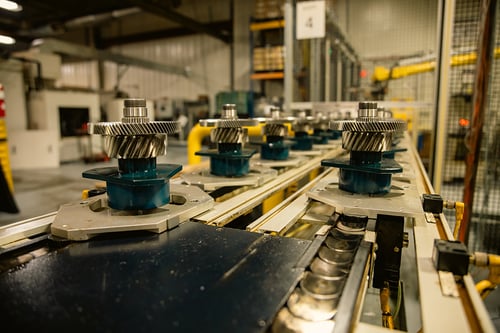
- Check the fixturing: The fixturing or work holding inside the grinding machine should be correctly dialed in, clean and in good working order. Check it periodically and use a good coolant inside the machine for the grinding process.
- Properly mount and maintain the wheel: Follow all safety recommendations for wheel mounting and conduct regular inspection of the wheel, spindle and blotters. Operators should consult ANSI B7.1: Safety Requirements for the Use, Care and Protection of Abrasive Wheels.
- Document the entire process: Look at the grinding process from start to finish to see where efficiencies and improvements can be found. Process variables such as wheel speed, workpiece speed, infeed, feed rate, shifting distance, dressing frequency, coolant type and coolant flow rate can all affect material removal rate, surface finish, profile accuracy, heat, wheel wear, vibration and noise. Documenting these variables helps identify where cycle time, wheel life or part quality can be improved. The Weiler Process Solutions (WPS) program helps users better manage grinding wheel costs and increase productivity by testing and evaluating different options to compare product life, reduce cycle times and eliminate bottlenecks.
 Improve throughput in your gear grinding process
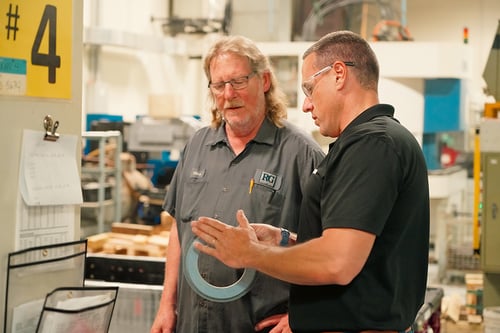
Because continuous generating gear grinding requires specific knowledge and experience, an application engineer is critical to ensure process efficiency. If continuous generating gear grinding is limiting capacity, Weiler Abrasives can help evaluate wheel performance, dressing frequency, cycle time, coolant delivery and other process variables to identify opportunities to improve throughput, wheel life and cost per part. Talk to a gear grinding expert today.
Read the full article in Gear Solutions: 6 Tips to Optimize Throughput in the CGG Grinding Process