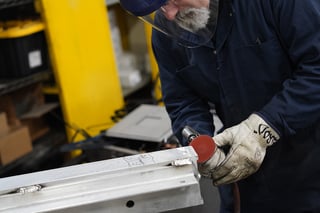
In this article:
Learn how cross-contamination can occur when preparing and cleaning aluminum welds, why it matters in shipbuilding and fabrication, and how proper abrasive selection and storage practices can help reduce rework.
Aluminum is being used more frequently in shipbuilding thanks to the many benefits the material offers, including lighter weight and maneuverability for ships in tighter waters.
And the material isn’t limited to small components. It’s used for many critical welds and — in some cases — for constructing entire ships.
However, it’s important to be aware of common challenges involved with welding and cleaning aluminum and understand how it differs from other materials. Preventing cross-contamination when preparing aluminum welds is especially critical, as cross-contamination can result in rework or failed welds that may end up costing thousands or even millions of dollars.
Choosing the right product for weld prep and cleaning can help reduce the chance for cross-contamination in aluminum welding.
Why Cross-Contamination Matters in Aluminum Welding
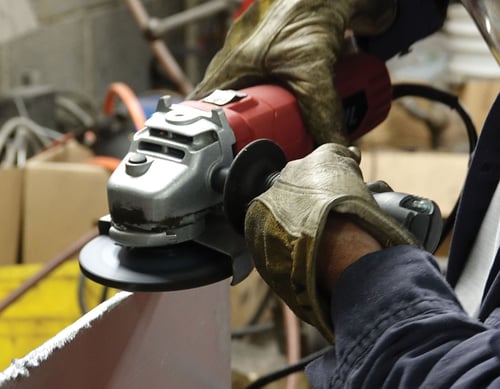 Aluminum welds are typically more susceptible to contamination than other materials. This makes it crucial to thoroughly clean the aluminum base metal before welding to remove any contaminants or impurities that might be on the material. This helps ensure proper penetration and a good final weld.
Cross-contamination can happen in multiple ways, including from other metals. Contamination can also happen if elements such as sulfur, iron or chlorine are introduced. This type of contamination can be introduced in several ways.
Environmental or storage contamination in the facility:
When aluminum is being stored, prepared and welded in the same facility where carbon steel or other metals are also being stored, prepared and welded, it can result in cross-contamination. Grinding carbon steel puts microscopic iron particles into the air that can settle as dust. If this dust lands on the aluminum base material or filler metals, it can cause rust on the material very quickly.
Using the wrong abrasive:
The abrasive product used to grind or clean the metal can also be a source of cross-contamination if an operator uses the wrong product for the material. For example, a steel wire wheel used on aluminum or a bonded abrasive that is not labeled as contaminant-free are common sources of cross-contamination on aluminum. The problem can also occur when a ceramic grinding or cutting wheel is first used on steel and then on aluminum. While operations are likely to try to limit the number of products they use, it’s recommended to use aluminum cutting and grinding wheels for aluminum and steel products for steel — and never mix the two. This limits the potential for cross-contamination.
Reducing Rework in Shipbuilding and Aluminum Fabrication
The ramifications of improper weld cleaning or using the wrong product on aluminum can be substantial — and they could occur weeks or months down the road. When failed welds or cracked seams are discovered, they may require significant rework.
If the ship is not yet completed when mistakes are found, it can also mean project delays. If the ship is already in service, failed welds caused by cross-contamination can be even more costly — perhaps requiring an entire ship rebuild with a price tag of millions of dollars. Failures could also be catastrophic if they occur when the ship is in the middle of the ocean.
Preventing Cross-Contamination in Aluminum Weld Prep
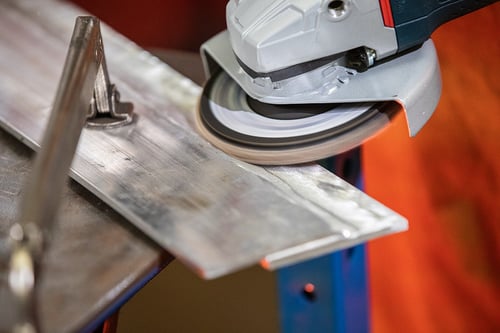 Many shipbuilding operations have stringent guidelines regarding what types of surface conditioning products can be used in the facility.
Larger operations often have a tool room where they store abrasive products. Facilities that are dedicated to only aluminum welding have much less potential for cross-contamination. In facilities where many material types of stored, prepared and welded, it requires diligence to keep the materials separated. One good way to prevent cross-contamination is to store aluminum-specific abrasives in their own sealed, air-tight containers.
In a situation where cross-contamination has happened (or the operator believes it may have happened), clean the base material thoroughly with a solvent to remove the contamination from the surface.
How Abrasive Selection Helps Reduce Contamination Risk
A primary way to prevent cross-contamination when preparing or cleaning aluminum welds is to choose abrasive products that are made specifically for use with aluminum. Abrasives manufacturers have tested these products and designed them to not leave contaminants on aluminum.
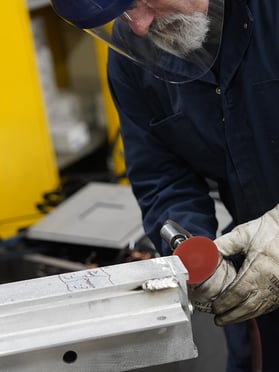 For pre-weld cleaning, such as removing corrosion or oxide from the workpiece, it’s recommended to use a stainless steel wire brush. Wire brushes also eliminate concerns about product loading since there are no abrasive grains for the aluminum to stick to. Loading occurs when the base material heats up and adheres to the abrasive grains, clogging them up.
Cutting and grinding aluminum often require bonded abrasives. Aluminum-specific products work very well because they are formulated to run more smoothly and minimize loading during the process. Coated abrasive flap discs, resin fiber discs and blending discs designed specifically for aluminum can also be used.
Many bonded and coated abrasives designed for aluminum have an additive or topcoat that aids in grinding aluminum while minimizing loading. This helps improve productivity and extend product life.
Need help choosing the right abrasive for aluminum?
Download the Weiler Aluminum Solutions Brochure to explore cutting, grinding, blending, cleaning and finishing products designed for aluminum and other soft metals.
Best Practices for Preparing and Cleaning Aluminum Welds
The use of aluminum is growing in many industries — including shipbuilding. Taking the proper steps and following best practices when preparing and cleaning aluminum can help save time and money and eliminate the potential for costly rework.
Using the proper abrasives for aluminum helps ensure the necessary quality, prevent rework and benefit productivity and efficiency. While abrasive products designed specifically for aluminum may cost more upfront, they save significant time and money in the long run.
Frequently Asked Questions
What causes cross-contamination when welding aluminum?
Cross-contamination can occur when materials such as iron, sulfur, chlorine or particles from other metals are introduced to the aluminum surface before welding.
Can I use the same grinding wheel on steel and aluminum?
No. Abrasives used on steel can transfer contaminants to aluminum. Use abrasive products dedicated to aluminum.
What type of brush should be used to clean aluminum before welding?
A stainless steel wire brush dedicated only to aluminum is commonly used for pre-weld cleaning.
Why is cross-contamination a concern in shipbuilding?
Contamination can lead to weld defects, failed inspections, rework, project delays and costly repairs after a vessel is in service.