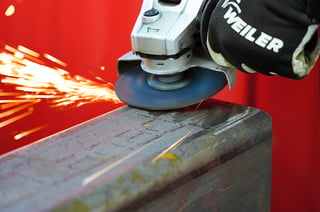
By Tony Hufford, Sector Manager, Metal Fabrication, Weiler Abrasives
Mill scale, that stubborn layer of iron oxide that forms on hot-rolled steel, is a common headache in metal fabrication and manufacturing applications.
Leaving mill scale on your base material can compromise adhesion for paint or coatings and weaken welds. Therefore, removing mill scale is a necessary evil — and a time-consuming process — for most fabrication and manufacturing operations.
Using abrasive products is an effective way to remove mill scale in many cases. Find out how to choose the right product for the job, and get tips for making quick work of mill scale removal.
At a Glance: How to Remove Mill Scale from Steel
- Use mechanical methods like grinding for most applications
- Coated abrasives provide control; bonded abrasives provide aggressive removal
- Specialized mill scale wheels balance durability and efficiency
- Removing mill scale improves weld quality and coating adhesion
What Is Mill Scale on Steel?
Mill scale is a type of iron oxide that forms on the surface of carbon steel during the hot-rolling process in the steel mill, which is where it gets its name. The high temperatures used in the rolling process oxidize the iron and harden the steel's surface. After hot-rolling, the steel is quenched — a process that strengthens and hardens it by heating the material and then rapidly cooling it. This captures the mill scale properties along the outer surface of the steel.
Mill scale is commonly found on steel plates and sheets because they are frequently hot-rolled in a mill. This makes it a common problem for steel workpieces used in general fabrication, as well as in structural, shipbuilding, and tank applications.
One easy way to tell if a piece has mill scale is the presence of rust. Mill scale is a natural inhibitor that prevents rust from forming, so if a piece of steel has heavy rust, it means it lacks mill scale. However, if a piece of hot-rolled steel has been sitting outside for a long time and shows no rust, it likely has a heavy mill scale that will be difficult to remove.
Why Is Mill Scale Difficult to Remove?
While the mill scale layer is usually thin, it is typically not thin enough to be removed by hand without a tool. This is partly because the mill scale layer is extremely hard — much harder than the carbon steel base material.
You can choose to weld through mill scale, but this is difficult to do properly. When mill scale isn’t removed before welding, weld failure can result. Even in applications that don’t require welding, mill scale can cause problems because it prevents paint or coatings from adhering well to the steel.
As a result, most operations — especially those for which weld quality is critical — will take the time to remove mill scale rather than try to weld through it.
What Are the Best Methods for Removing Mill Scale?
Larger operations, such as shipyards, may use a shot blast machine to remove mill scale, but this method requires expensive equipment and is not a viable option for many applications. Others may try to remove mill scale with chemicals, a messy solution that introduces acids and raises environmental and safety concerns.
For most fabrication and manufacturing operations, a right-angle grinder paired with an abrasive wheel or disc is the most efficient and cost-effective option. Because the extra labor time and downtime spent removing mill scale can add up, choosing the right abrasive product for the application is key. Removing mill scale is a non-value-added process, so it’s important to do so as efficiently as possible.
| Method | Speed | Cost | Surface Control | Best For |
|---|---|---|---|---|
| Shot blasting | Fast | High | Medium | Large-scale operations |
| Chemical removal | Slow | Medium | High | Specialty applications |
| Coated abrasives | Medium | Low | High | General fabrication |
| Bonded abrasives | Fast | Low | Low–Medium | Heavy mill scale |
| Mill scale wheel | Fast | Low | High | Balanced performance |
For operations focused specifically on grinding wheel selection and grinding performance, read our complete guide to mill scale removal with high performance grinding wheels.
Best Abrasives for Mill Scale Removal
There are three main product categories for removing mill scale:
- Coated abrasives, such as ceramic flap discs or resin fiber discs, are the choice for many operations. These products offer better operator control because they can be operated in a flat orientation against the workpiece, and they provide lighter material removal, helping to avoid damage to the base material. However, the hardness of the mill scale layer wears out a coated abrasive disc quickly — often in just a few minutes, depending on the mill scale’s thickness and hardness.
- Bonded abrasives, such as 1/4-inch or 1/8-inch grinding wheels, provide aggressive removal, which is good for taking off the hard mill scale layer. But facilities must be careful to remove only the mill scale, and not to remove or gouge the base material, since grinding wheels are optimally used at a 35-degree angle to the workpiece. However, grinding wheels provide much better life when tackling mill scale than coated abrasives, so it’s a trade-off that operations must consider when choosing the right product.
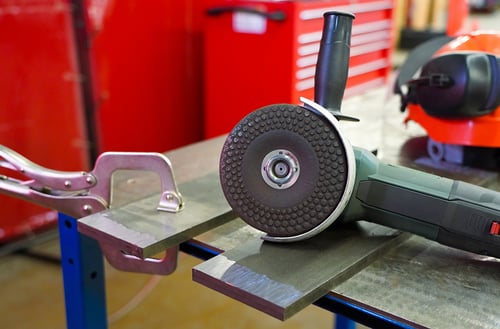 A new approach: mill scale-specific abrasives. The Tiger mill scale wheel is a new product designed specifically to remove mill scale. It delivers the benefits of a coated abrasive while offering the durability and product life of a bonded abrasive. The new wheel is slightly curved and is textured to provide aggressive mill scale removal. It also offers a larger contact area and is designed to be run at a flatter angle, like a flap disc or resin fiber disc, reducing the risk of gouging the workpiece or removing too much base material.
Best Practices for Removing Mill Scale Efficiently
While choosing the right product is a critical first step, several other best practices can help you get the most efficient results when removing mill scale.
- Test various abrasive options: Not all mill scale is the same. Sometimes it is a lighter layer that can be easily removed with a flap disc or resin fiber disc. But in some cases, it is a thicker layer that is more stubborn. Operations always want the fastest solution possible, but what’s right for one application may not be right for another. It’s best to try a variety of solutions to remove mill scale and find the one that works most efficiently for your specific application.
- Don’t use too much pressure: Using a coated abrasive to remove mill scale will quickly dull that product and result in a worn-out grain. This can lead operators to push harder on the grinder to improve performance, increasing fatigue. It’s recommended to use the right abrasive with the proper amount of pressure. Don’t press too hard: Let the tool do the work.
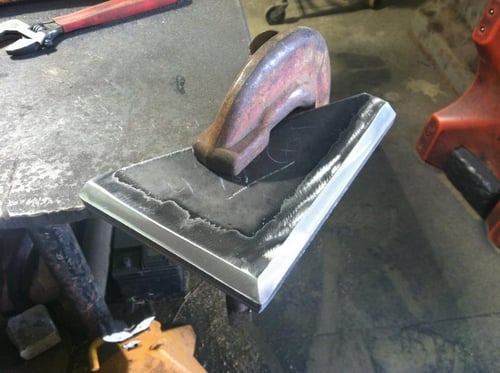 Watch the material removal: Remove only the necessary amount of mill scale to promote quality welds — and do so without removing base material. This can be more challenging when the wrong abrasive product is used. An operation may remove more material than necessary to achieve a good weld. Using a product that allows operators to work at a flatter angle reduces the risk of gouging the workpiece or removing too much material. Bonded wheels are often used at a 35-degree angle, whereas coated abrasives or the new Tiger mill scale wheel can be operated at a flat orientation to the workpiece.
Removing mill scale efficiently
Selecting the appropriate abrasive product for mill scale removal depends on the severity of the mill scale, the desired surface finish, and the application workpiece. By understanding these factors, you can choose the most effective and efficient method to achieve a clean and weld-ready surface. New wheel technologies can also help deliver the best of both worlds when choosing between bonded and coated abrasive products.
Mill Scale Removal Tips for Fabricators
Frequently Asked Questions About Mill Scale
Can you weld over mill scale?
While it is possible to weld over mill scale, it is not recommended. Mill scale can contaminate the weld, leading to poor penetration, increased spatter, and a higher risk of weld failure. For best results, remove mill scale before welding to ensure strong, consistent weld quality.
What is the fastest way to remove mill scale?
The fastest way to remove mill scale for most fabrication applications is using a right-angle grinder with the appropriate abrasive. Bonded grinding wheels provide aggressive removal for heavy mill scale, while coated abrasives offer better control and efficiency for lighter layers.
Does mill scale prevent rust?
Yes, mill scale can temporarily inhibit rust because it forms a protective oxide layer on the steel surface. However, once the mill scale is damaged or removed, the exposed steel can rust quickly. This is why proper surface preparation is important before coating or painting.
What abrasive is best for removing mill scale?
The best abrasive depends on the thickness and hardness of the mill scale. Coated abrasives like flap discs provide control and are ideal for lighter removal, while bonded grinding wheels offer more aggressive material removal. Specialized mill scale wheels combine durability and control for improved efficiency across a range of applications.
Why is mill scale difficult to remove?
Mill scale is difficult to remove because it is significantly harder than the underlying steel. It forms during the hot-rolling process and bonds tightly to the surface, requiring mechanical or chemical methods to remove it effectively.