By Ingo Kuhl, Vice President, Global Technology & Product Development, Weiler Abrasives
Across global manufacturing, sustainability has evolved from a focus area on specific projects into an absolute requirement for staying competitive. For companies operating in the U.S. and the EU, pressure is mounting from consumers, investors, and regulatory bodies to drastically reduce environmental impact.
At a Glance: Sustainability in Abrasive Manufacturing
Sustainability in abrasives focuses on longer product life, reduced waste and lower emissions
Over 50% of carbon impact occurs in raw material sourcing
Innovations include non-toxic chemistries, optimized product usage and recycling systems
Programs like WCP help customers reduce operational emissions
Sustainability now directly impacts cost, efficiency and regulatory compliance
At Weiler Abrasives, sustainability is not just a single project to be completed with a checkmark; rather, we view it as a continuous evolution embedded in our day-to-day thinking. Sustainability is a primary driver of our product innovation, linking environmental health and efficiency to superior performance and cost savings for end users.
In light of our efforts, Weiler was recently recognized by the Sustainable European Abrasive Manufacturers (SEAM) for our significant sustainability-related achievements. In a March 2026 CO2 Emissions Report, SEAM identified Weiler as one of only 11 abrasives companies to achieve recognition for climate leadership for the 2024 fiscal year by achieving greater than 4% emissions reduction. The emissions reduction performance aligns with the Science Based Targets initiative (SBTi) linear decarbonization trajectory, which is required to remain on track for a 1.5°C annual trajectory.
The SEAM report, which tracks progress toward Net Zero across European operations, found that while total sector emissions remained broadly stable, leaders like Weiler Abrasives are driving a structural transition through energy efficiency measures, process optimization, increased electrification and strategic renewable energy production and procurement.
Why Sustainability Is Driving Change in Abrasive Manufacturing
 Even five to 10 years ago, sustainability might have been treated as an “add-on” that was nice to have. Today, it is a core part of our development process from the very beginning — alongside product performance, safety, and cost.
Sustainability as a Core Design Parameter in Abrasive Product Development
This manifests in several ways when it comes to new product development, such as:
Designing Abrasives for Longer Life and Reduced Waste
When an abrasive product lasts longer, it helps our end users reduce how many discs or wheels they are using. Our Metalynx and Tiger 2.0 products, for example, deliver up to 40% longer life, directly improving a customer’s EHS profile by reducing waste.
Improving Efficiency Through Smarter Product Use
Another recent development is our Optimum Use Line. This visual indicator helps users utilize the wheel to its full life. It’s a simple but powerful tool to eliminate user uncertainty and prevent premature disposal, reducing product waste.
Replacing Hazardous Chemicals with Safer Alternatives
One of our primary focus areas is innovative product development that reduces or eliminates toxic chemicals. We view this as an innovation challenge rather than a simple substitution exercise. Many chemicals used in abrasive bonding systems perform multiple functions simultaneously, and any alternative must deliver identical cutting and grinding performance while also remaining stable during large-scale manufacturing. By replacing certain chemicals with non-toxic options, we reduce air and groundwater pollution while continuing to meet the high standards our end users expect.
How Abrasive Manufacturers Reduce Environmental Impact Upstream
 Our sustainability focus extends beyond our own labs and manufacturing facilities. In the abrasives industry, more than 50% of the carbon footprint occurs upstream in the supply chain during raw material manufacturing. This makes responsible supplier selection critical.
We value transparency regarding material origins and energy use, and we work closely with our vendors to find sustainable solutions and choose partners who are aligned with our environmental, social, and governance (ESG) policies. By collaborating jointly at the material level, we can optimize formulations and increase recycled content even before materials reach a Weiler facility — where the carbon reduction potential is highest.
Sustainable Manufacturing Practices in Abrasive Production
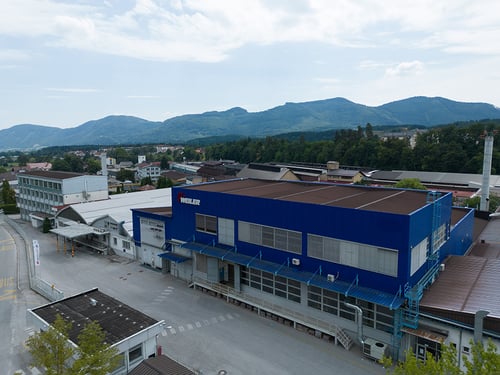
While we work on new product development and global strategy, we are also proactively implementing tangible measures in our own facilities.
Our Slovenia plant serves as a successful blueprint, featuring in-house recycling that processes scrap produced during the manufacturing process. A substantial portion of this material is reused in other products.
In 2024, we improved our recycling yields by 128 tons of incrementally reused materials. This effort is complemented by facility improvements, such as producing more of our electricity through solar resources and installing new high-efficiency HVAC systems designed to decrease energy consumption.
How Abrasives Impact Customer Sustainability and ESG Goals
In addition, our sustainability efforts extend beyond our walls and into our customers' operations. In some applications, up to one-quarter of operation-related emissions occur downstream when the customer uses the product. Our Weiler Consumable Productivity (WCP) program is an essential ESG tool for our end users. Using testing and evaluation, it provides data that facilities need to document process optimization and waste reduction for compliance.
These efforts are a clear demonstration of the value we place on sustainability for ourselves and for our end users.
A Global Commitment to Sustainable Abrasive Innovation
As a founding member of SEAM, Weiler Abrasives helps set industry-wide sustainability standards. These frameworks influence the products we develop for global markets, ensuring we meet high benchmarks for social and environmental responsibility.
For us and for many of our end users, efficiency and sustainability are now inseparable. While government goals like carbon neutrality by 2050 drive action, our ultimate goal is to remain a global leader by providing the most efficient tools and processes possible to make production and manufacturing more sustainable today.